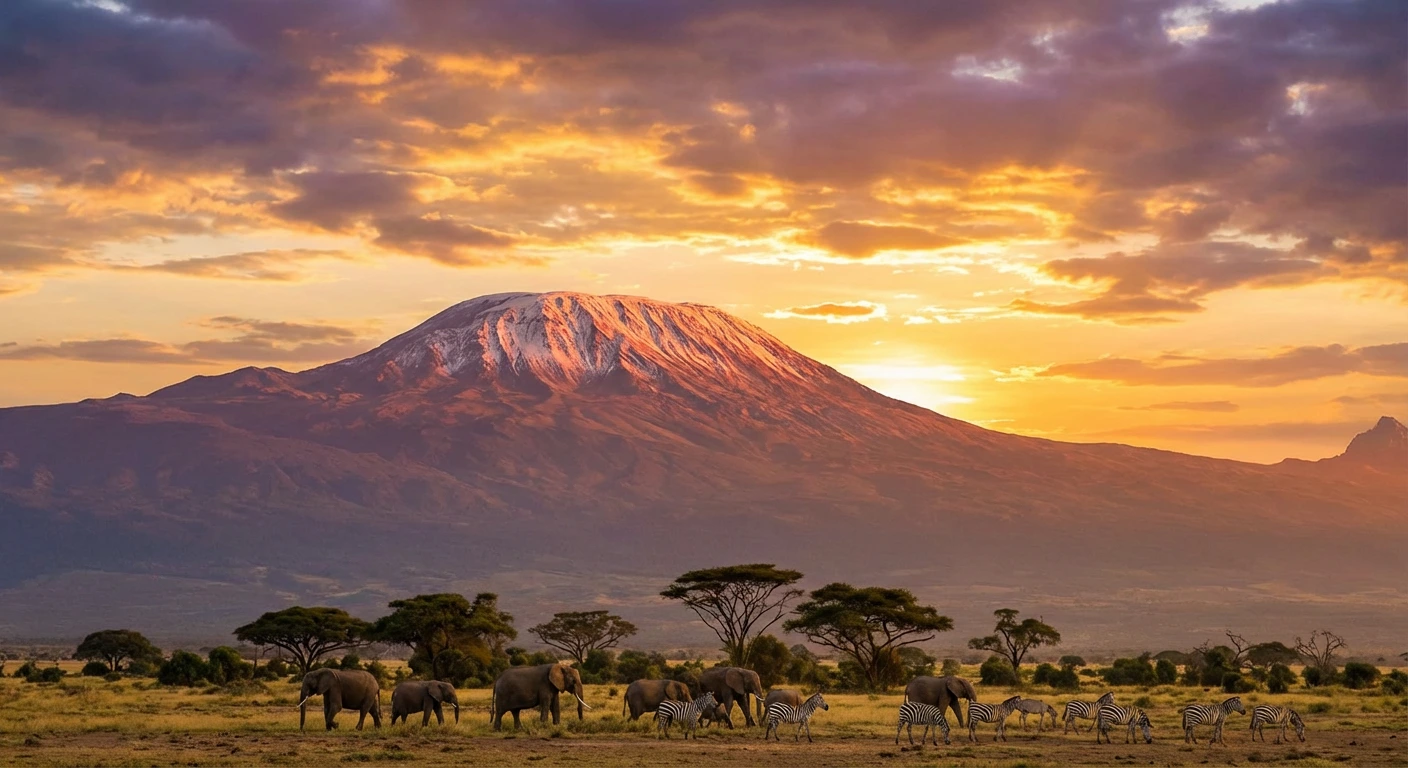
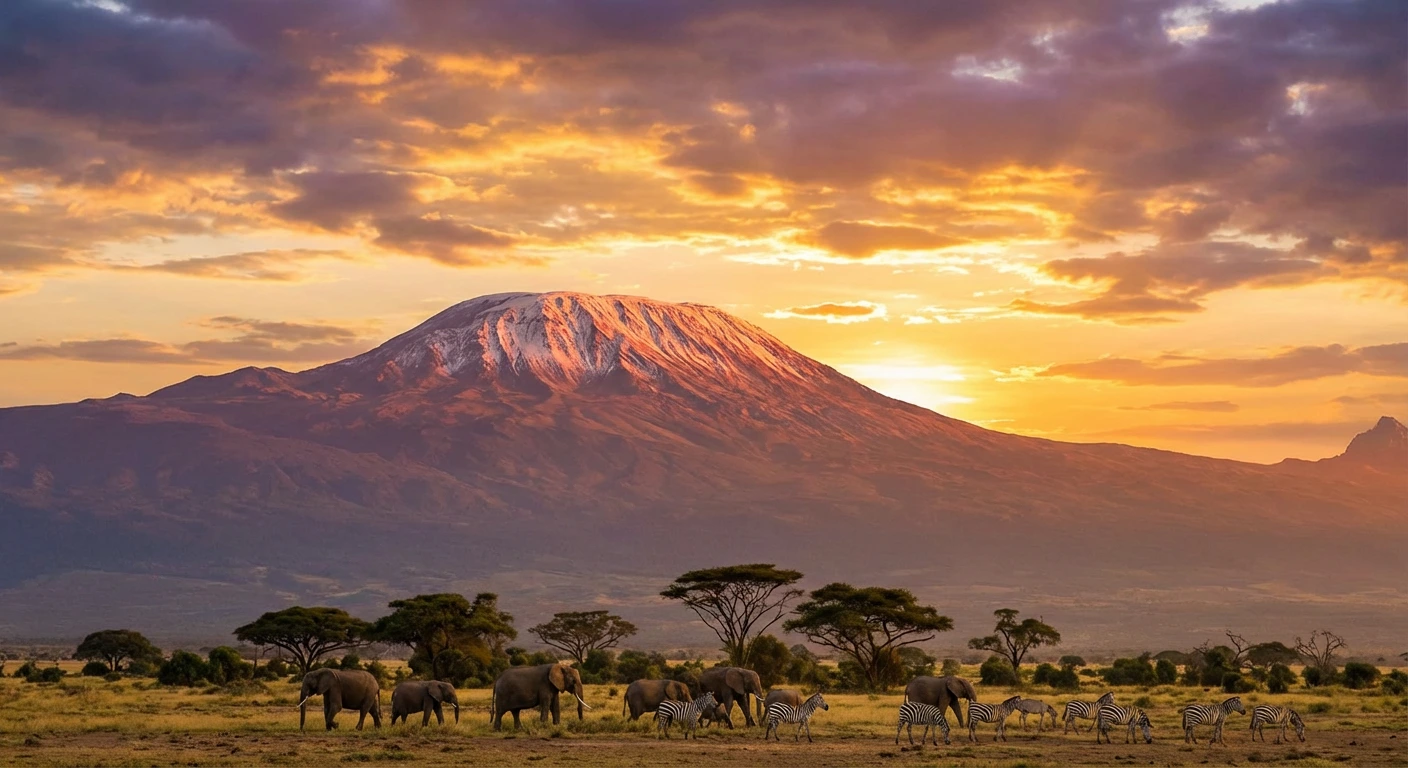
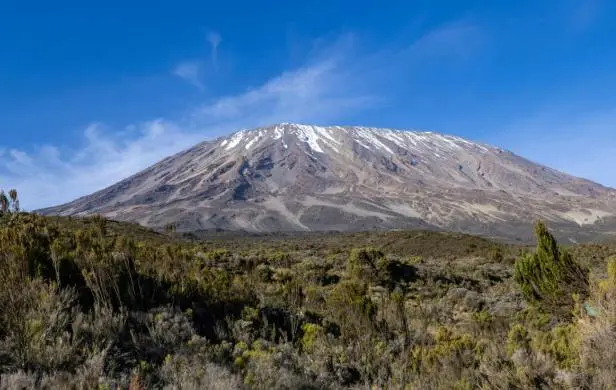
Here is a comprehensive description of Mount Kilimanjaro: Overview Mount Kilimanjaro is the highest mountain in Africa and the highest single free-standing mountain in the world. Located in northeastern Tanzania, near the Kenyan border, it is one of the most famous and iconic peaks on Earth. It is a dormant stratovolcano that rises dramatically from the surrounding savannah plains. Key Statistics Elevation: 5,895 meters (19,341 feet) above sea level at its highest point, Uhuru Peak. Location: Kilimanjaro Region, Tanzania. Status: A UNESCO World Heritage Site (designated in 1987). Formation: It is composed of three distinct volcanic cones: Kibo: The highest and central cone (dormant, could erupt again). Mawenzi: The second highest, rugged and craggy (extinct). Shira: The lowest and oldest cone, now a plateau (extinct). Ecological Zones One of the most fascinating aspects of climbing Kilimanjaro is the journey through five distinct climate zones, often described as walking from the equator to the North Pole in a matter of days: Cultivation Zone (800m – 1,800m): The lower slopes are fertile farmland, receiving plenty of rain. This area is lush with coffee and banana plantations and local villages. Rainforest Zone (1,800m – 2,800m): A dense, humid montane forest teeming with life. You might spot Blue Monkeys, Colobus Monkeys, and a variety of exotic birds here. Heath and Moorland (2,800m – 4,000m): The trees disappear, replaced by low shrubs and unique, giant flora like the Dendrosenecio kilimanjari (Giant Groundsel) and giant lobelias. The views open up, and the air becomes thinner. Alpine Desert (4,000m – 5,000m): A stark, rocky landscape with very little vegetation. The temperatures fluctuate wildly between scorching days and freezing nights. It resembles the surface of Mars. Arctic Summit Zone (5,000m+): The top of the mountain is a glacial environment of ice and rock. Oxygen levels are roughly half of what they are at sea level. This area includes the famous glaciers and the crater rim. The Climbing Experience Kilimanjaro is a major destination for mountaineers and trekkers because it is a "walk-up" mountain. This means you do not need technical mountaineering skills (like ropes or crampons) to reach the summit via the standard routes. However, it is a physically demanding challenge due to the high altitude. Popular Routes: There are several established routes to the top, each with different difficulty levels and scenic qualities. The most famous include the Marangu (Coca-Cola route), Machame (Whiskey route), Lemosho, and Rongai. Success Rates: Reaching the summit is not guaranteed. Altitude sickness is the primary reason climbers are forced to turn back. The Glaciers Kilimanjaro is famous for its snow-capped peak near the equator. However, the ice fields are shrinking rapidly due to climate change. Scientists predict that the mountain's iconic glaciers may disappear entirely within the next few decades, making the current era a critical time to witness them. Are you planning a trip there, or are you writing a page about African geography in your workspace? I can help you draft an itinerary or structure an article about it.
8 Days 7 Nights
8 Days 7 Nights